
Crafting Stronger Scottish Brand Stories Through Provenance

Introduction
Provenance storytelling has become one of the most powerful tools in modern branding, and nowhere is this more evident than in Scotland. From whisky and wool to skincare and seafood, Scottish brands are transforming their origins into compelling narratives that travel far beyond their local glens and harbours. In an era where 73% of global consumers say they are willing to pay more for brands that are transparent about their origin and processes, heritage and place are no longer background details; they are central pillars of value. Scottish businesses, both historic and newly founded, are leaning into this trend with a mix of authenticity, creativity, and strategic discipline.
At its core, provenance storytelling is about answering three deceptively simple questions: Where does this come from? Who made it? And why does that matter to me? Scottish brands use these questions to turn landscapes into characters, craftspeople into protagonists, and local traditions into differentiators in crowded global markets. Whether a Speyside distillery exporting to Asia, a Harris tweed mill partnering with luxury fashion houses, or a seaweed skincare brand selling online direct-to-consumer, the story of origin becomes a route to trust, premium pricing, and emotional connection. Understanding how they do this offers valuable lessons for any brand looking to communicate heritage, craft, and place with impact.
Defining Provenance Storytelling in a Scottish Context
Provenance storytelling goes beyond listing a product’s location on a label; it weaves geography, history, and human skill into a coherent narrative that customers can understand and retell. In Scotland, this often begins with the land itself: rugged coastlines, mist-covered lochs, island communities, and fertile valleys. Brands like Isle of Harris Gin, for example, don’t just say they are “from Harris”; they describe how Atlantic winds, island traditions, and a close-knit population of fewer than 2,000 people shape the character of their spirit. The story is not merely descriptive; it establishes a sense of scarcity, care, and identity that justifies a premium position in a saturated gin market.
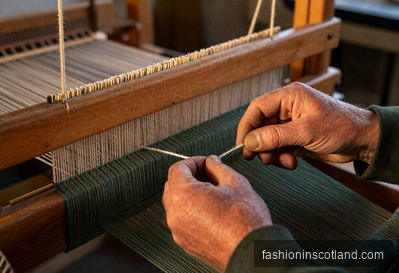
Equally important is the role of craft and technique, which Scottish brands use to bridge the past and present. Harris Tweed Hebrides emphasises that every meter of its cloth is handwoven at the home of an island weaver, protected by the Harris Tweed Act of Parliament and the iconic Orb Mark. This intertwines legal protection, local employment, and generational expertise into a single story thread that is hard for competitors to copy. Similarly, artisanal producers like Isle of Mull Cheese or Inverliever Lodge Smokehouse detail aging rooms, smokehouses, and traditional recipes, not just as technical processes but as rituals that connect today’s makers to ancestors and land. The result is a perception that the product could not truly be made anywhere else.
The third element is cultural heritage, from folklore and language to music and festivals. Whisky distilleries such as Lagavulin and Laphroaig on Islay embed Gaelic place names, local myths, and stories of island resilience into their tours, packaging, and digital content. Visitor centres routinely report that narrative-led experiences increase dwell time and drive higher average spend in their shops. Rather than reducing history to clichés of tartan and bagpipes, the most effective brands curate specific, grounded stories: the rebuilding of a distillery after fire, the survival of a family recipe, or the revival of a nearly-lost craft. These precise details transform broad notions of “Scottishness” into something tangible and emotionally resonant.
How Scottish Brands Communicate Heritage and Craft
Scottish brands communicate heritage and craft through a multi-layered mix of physical experience, visual identity, and digital content. Whisky tourism provides a clear example: in 2023, Scotch whisky visitor centres attracted over 2 million visitors, many of whom cite storytelling and behind-the-scenes access as their main motivation. Distilleries like Glenfiddich and The Macallan design their tours as carefully scripted journeys, starting with the founding family story, moving through maltings and stills, and ending with tastings that relate flavours back to specific decisions and historical milestones. The buildings themselves, whether a 19th-century stone warehouse or an ultra-modern glass and timber structure, become visual metaphors for the blend of tradition and innovation.
Packaging and design play an equally critical role in communicating craft at the point of purchase. Edinburgh-based brands such as Steven Brown Art, which turned colourful Highland cow paintings into a lifestyle label, use familiar Scottish imagery but reinterpret it in contemporary ways, avoiding the trap of nostalgia alone. In the food sector, producers like The Loch Fyne Oyster Company or Hebridean Sea Salt pair photographic depictions of seascapes and harvesting with clear explanations of processes such as hand-diving, line-fishing, or solar evaporation. Step-by-step diagrams on the back of a pack, coupled with short stories about individual fishers or crofters, turn an otherwise generic product into a specific, traceable experience. This transparency not only aids premium positioning but helps address consumer concerns about ethics and sustainability.
Digital storytelling has become the bridge between remote Scottish locations and a global audience. Brands such as Skye Weavers share videos of pedal-powered looms in a croft on the Isle of Skye, giving viewers an intimate view of the human labour and ingenuity required to create each scarf or blanket. Instagram and TikTok are used to show the rhythm of rural life: lambing seasons, stormy ferry crossings, and community gatherings, each subtly reinforcing the message that these products carry pieces of a real, living culture. Meanwhile, more established businesses like Johnstons of Elgin publish long-form content on their websites explaining fibre sourcing, finishing processes, and quality tests, pairing archival photos with modern factory shots to convey continuity over two centuries. This combination of short-form visual storytelling and detailed educational content allows audiences to engage at multiple depths, depending on their interest and time.
Place as a Strategic Asset: From Isles to Inner Cities
Place is arguably the most distinctive asset in Scottish provenance storytelling, offering a palette of island, Highland, Lowland, and urban identities. Island brands in particular often leverage a sense of remoteness and purity. The Isle of Harris Distillers famously describes itself as “the Social Distillery,” emphasising its mission to create sustainable employment in a fragile local economy. Its marketing materials feature real islanders, fishing boats, and weather-beaten piers, positioning each purchase as a contribution to community resilience. Similarly, Orkney-based brands such as Highland Park whisky or Orkney Craft Vinegar use the islands’ Norse heritage and wind-swept landscapes to frame their products as born of elemental forces and aged in extreme conditions.
However, provenance storytelling is not limited to rural or coastal settings; Scottish cities have increasingly harnessed their own distinctive narratives. Glasgow’s creative scene has inspired fashion and streetwear labels that fuse industrial heritage with contemporary music and art culture, emphasising grit, humour, and diversity as brand traits. Edinburgh-based tech-enabled food and drink brands, such as BrewDog’s early Scottish positioning or newer craft coffee roasters, lean into narratives of intellectual heritage, Enlightenment thinking, and a global outlook shaped by centuries of trade. By highlighting specific neighbourhoods, such as Leith or Finnieston, brands can tap into micro-identities and local pride, using murals, pop-up events, and collaborations with local artists to anchor their stories in particular streets and communities.
A key strategic consideration is how tightly to bind a brand to a single place. On one hand, a strong tie can create powerful differentiation and loyalty; on the other, it may limit future expansion or relocation. Some whisky brands with production in multiple sites, for example, choose to foreground Scotland as a whole rather than one region, or they create sub-ranges named after specific locales. Food brands that start on a small island but later move parts of production to the mainland must navigate this carefully, using transparent messaging to explain what has changed and what remains rooted in the original place. Done well, place-based storytelling becomes a living narrative that can evolve with the business while honouring its origins, rather than a static postcard image that quickly feels inauthentic.
Balancing Authenticity, Regulation, and Commercial Goals
Effective provenance storytelling by Scottish brands requires a delicate balance between romance and rigour. There is always a temptation to lean into misty glens, ancient legends, and generic Highland imagery, especially for international audiences. Yet consumers are increasingly sophisticated: research by the European Commission shows that 42% of shoppers check origin claims when buying food and drink, and social media enables swift scrutiny of anything that feels embellished. This is where Scotland’s robust frameworks for protected names and geographical indications become powerful allies. Labels like Scotch Whisky, Scottish Farmed Salmon, and Stornoway Black Pudding carry legal guarantees of origin and production methods, providing a factual backbone to more emotive narratives.
At the same time, over-reliance on regulatory marks can make stories feel dry or bureaucratic. The most persuasive brands use regulation as a starting point and then layer on human detail. For instance, a small distillery complying with all Scotch Whisky Association rules might still choose to focus its storytelling on the personality of its master distiller, the quirks of a particular copper still, or experiments with local barley strains. Similarly, a cheesemaker operating under Protected Geographical Indication status can differentiate itself by spotlighting the grassland biodiversity of its specific farm, or the decision to mature cheeses in an old stone byre by the sea. These vivid, situational details make compliance feel like a baseline and character like the true differentiator.
There are also commercial trade-offs to navigate. Provenance-rich narratives can support higher price points and customer loyalty, but they may increase expectations for transparency and limit cost-saving measures such as outsourcing. Brands that grow quickly must decide how to maintain credible stories of craft when scaling up production. Some Scottish businesses address this by creating clear tiers: a core range that is widely available and a limited-edition line that remains tightly tied to specific sites, ingredients, or artisans. Others invest in open-door policies, virtual tours, and traceability tools, inviting customers behind the curtain to see how growth is being managed without losing soul. The most successful recognise that provenance storytelling is not a one-off campaign but an ongoing dialogue that must remain honest as circumstances change.
Conclusion
Provenance storytelling has become a defining strength of Scottish brands, allowing them to compete not only on product quality but on meaning, trust, and emotional resonance. By articulating where products come from, who makes them, and how place shapes their character, these businesses turn geography and heritage into strategic assets. The interplay of land, craft, and community enables a diverse range of categories—from whisky and tweed to skincare, chocolate, and gin—to command global attention in a crowded marketplace. Importantly, the most compelling stories are specific rather than generic, rooted in real people, real processes, and real locations that customers can verify and revisit.
For any brand seeking to apply these lessons, the path forward involves several practical steps. First, conduct a deep audit of your own origins: landscapes, buildings, skills, and local customs that genuinely shape your product. Second, choose a few sharp, distinctive details and build consistent narratives across packaging, digital channels, and in-person experiences, avoiding both cliché and over-complication. Third, embrace transparency and, where relevant, certification schemes or origin marks as anchors for trust, while still allowing creativity and personality to shine through. Finally, treat provenance storytelling as a living practice: as your business grows or your context changes, update your narrative honestly, showing customers how you are evolving while remaining faithful to the people and places that made you. Scottish brands demonstrate that when heritage, craft, and place are communicated with care and conviction, provenance becomes not just a story you tell, but a value your audience is proud to share and support.
More from Fashion in Scotland
Published by the Fashion in Scotland editorial team · July 19, 2026
This article was produced with AI-assisted drafting and curated data, with editorial oversight for clarity. It is provided for general information only.