
Connecting Scottish Mills and Makers to Strengthen Local Textile Supply Chains
Introduction
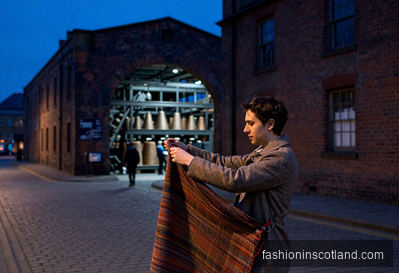
Across Scotland, historic textile mills, innovative designers, and skilled craftspeople exist within a relatively small geographic area, yet many operate in silos. Yarns travel thousands of miles while spinners are a short drive away; designers import cloth while weaving sheds sit with spare capacity; small apparel brands struggle to meet minimum order quantities while mills search for reliable, repeat customers. Connecting mills to makers is no longer a romantic notion rooted in nostalgia for Scotland’s industrial past. It is a practical, economic, and environmental strategy for strengthening local textile supply chains and building a more resilient future for Scottish fashion, interiors, and technical textiles.
Scotland still holds considerable textile strength: over 400 textile and apparel businesses, more than 8,000 direct jobs, and exports exceeding £360 million annually, according to industry bodies such as UKFT and Scottish Enterprise. From the Borders’ weaving heritage to the Highlands’ wool traditions, the ingredients for a joined-up local system already exist. The challenge is alignment: matching capacity with demand, skills with opportunity, and stories with markets that value provenance. A new generation of designers, digital tools, and infrastructure projects is beginning to bridge the gaps. The question now is how to deepen those connections so mills and makers can collaborate, innovate, and compete together on the world stage.
Mapping the Scottish Textile Ecosystem
Effective connection starts with visibility. Many independent designers in Glasgow or Edinburgh struggle to name more than a handful of Scottish mills, while small mills may only know a few local brands or tailors. A 2022 survey by Creative Scotland found that over 60% of small fashion and textile businesses sourced their primary fabrics from outside the UK, often citing “difficulty identifying local suppliers” and “minimum order constraints” as key barriers. This does not necessarily mean Scottish mills lack capacity; rather, information flows are fragmented. One mill might excel in short-run jacquard weaving, another in recycled woollen yarns, yet both remain largely invisible to emerging labels searching online for “ethical UK fabrics.”
Structured mapping initiatives can change this picture. Digital directories curated by industry clusters, such as those being piloted by regional development agencies, can list mills, spinners, finishers, dye houses, pattern-cutters, and micro-factories in a searchable way. For example, a Glasgow knitwear startup could filter for “merino yarn, minimum 5kg, dyed in Scotland, within 150 miles,” and instantly find two or three viable partners rather than defaulting to Italian wholesalers. Conversely, mills can consult the same database to identify small brands whose volumes match their spare capacity. Detailed profiles that specify machinery types, lead times, certifications, and sample policies provide transparency and reduce friction in first contact. Over time, this mapping becomes a living infrastructure: as more businesses join and update their profiles, the network becomes stronger, more accurate, and increasingly valuable to everyone involved.
Building Direct Relationships Between Mills and Makers
Technology alone cannot replace the trust and understanding built through direct human relationships. Many mills report that their most successful collaborations with designers began with a studio visit, a tour of looms, or a conversation over sample books. In Hawick, for instance, luxury knitwear brands have spent years co-developing yarn blends and stitch structures with local mills, resulting in pieces that command premium prices in Tokyo, New York, and Berlin. These partnerships thrive because makers understand the constraints and possibilities of the machinery, while mills appreciate the aesthetic vision and market needs of the brand. Designers learn that adjusting a repeat size can reduce loom waste; mills discover that small colour tweaks can dramatically increase a collection’s sell-through.
A systematic approach to relationship-building can extend these successes beyond the luxury segment. Regional “Mill to Maker” open days, where weaving sheds, dye houses, and finishing plants open their doors to designers, students, and micro-brands, create low-pressure opportunities for connection. Structured speed-networking—five or ten minute conversations facilitated by trade bodies—helps introverted makers and busy production managers find common ground quickly. Case studies from the Scottish Borders show that even a single open day can lead to tangible orders: one boutique womenswear label recently shifted 30% of its woven fabric sourcing from overseas to a Border mill after meeting the production director in person and realising small, high-margin runs were feasible. Step-by-step, the process looks like this: initial introduction at an event, follow-up email with moodboards, mill sends archive samples, designer sketches capsule collection, test run on loom, refinement after wearer trials, then a formal production contract. Each stage builds confidence and reduces perceived risk for both sides.
Overcoming Barriers: Minimums, Pricing, and Communication
Despite mutual interest, several recurring barriers prevent mills and makers from working together more extensively. Minimum order quantities (MOQs) are frequently cited: a small brand might need just 80 metres of cloth, while a mill’s standard MOQ is 300 metres to keep machines running efficiently. At first glance, the numbers appear incompatible, pushing the designer toward overseas stock service fabrics. However, Scottish mills and makers are experimenting with creative solutions. One Borders mill now reserves a percentage of loom time each month for “small batch pooled orders.” Multiple brands use the same base construction but specify different colourways, allowing the mill to hit its volume target while each designer retains a distinctive look. The administrative burden is higher, but the mill gains a portfolio of future clients rather than diluting capacity in speculative in-house developments.
Pricing and communication also require deliberate attention. Mills accustomed to dealing with global luxury houses may quote prices that scare off younger labels without context: a £35 per metre wool suiting can seem unattainable to a brand used to £8 imported poly-viscose. Yet when mills explain the breakdown—fibre quality, fair wages, environmental compliance, and energy costs—designers can assess value rather than just price. Some Scottish mills now offer tiered pricing structures and education sessions, showing how adjusting fabric width, finishing processes, or dye recipes can shave 10–15% off cost without undermining integrity. On the maker side, clear tech packs and measured expectations are crucial. Misunderstandings around lead times and tolerance levels can sour relationships quickly. Industry groups are beginning to share template tech sheets, costing calculators, and communication guidelines tailored to Scottish production, raising the baseline professionalism and reducing friction on both sides.
Localisation, Sustainability, and Storytelling
Connecting mills to makers is not only about logistics and economics; it is also a powerful sustainability strategy. Research by the Carbon Trust indicates that transport can account for 10–15% of a typical garment’s lifecycle emissions when fibres, fabrics, and finished products ping-pong across continents. A coat designed in Edinburgh, woven in the Borders, sewn in Glasgow, and sold in Dundee has a dramatically shorter supply chain than one involving four or five countries. Moreover, Scottish wool, flax, and even experimental nettle fibres represent underutilised local resources that can displace higher-impact imports. Projects in the Highlands are trialling fully traceable wool routes from croft to cone, where every step is mapped and measured. When these yarns flow into local mills and then into the hands of Scottish makers, the environmental benefits multiply while stories gain depth and authenticity.
Storytelling is a commercial asset as well as a cultural one. International consumers increasingly seek garments with a known origin and transparent production. Brands that can say, “This shirt’s cloth was woven at a family-owned mill in the Scottish Borders powered partly by hydroelectricity,” or “These blankets are knitted from undyed Hebridean wool spun 80 miles from the croft,” command higher prices and engender stronger loyalty. Collaborations that foreground place and process—short films of looms in motion, interviews with warp setters, photos of dye vats beside rivers—turn supply-chain transparency into marketing material. The key is to ensure stories remain grounded in verifiable practice rather than vague heritage tropes. Independent audits, QR-code traceability, and honest discussions of trade-offs (for example, using local but non-organic wool vs imported certified organic fibres) help build credibility. In this way, a connected Scottish textile network competes not just on cost or style, but on meaning.
Skills, Innovation, and the Next Generation
A robust local supply chain depends on people as much as facilities. Scotland faces a dual challenge: an ageing workforce in many mills and a cohort of highly creative graduates whose technical understanding of industrial production is often limited. Bridging this gap is essential if mills and makers are to co-create future-facing textiles. Initiatives such as paid internships in weaving sheds for design students, joint R&D projects between universities and mills, and apprenticeship pathways into specialist roles like loom tuning or colour chemistry are already showing promise. One technical college in the Central Belt reports that enrolment in textile manufacturing courses rose by 30% after partnering with local brands to showcase real job opportunities beyond fast-fashion retail.
Innovation thrives where skills intersect. Mills possess deep process knowledge—how to coax softness from coarse wool, how to balance tension across a wide rapier loom, how to achieve consistent colour from small dye lots. Makers bring fresh aesthetics, digital design tools, and connection to shifting consumer tastes. When these strengths meet, new categories emerge: 3D-knitted seamless garments using Scottish cashmere, performance tweeds blended with recycled synthetic fibres, or zero-waste pattern systems tailored to specific loom widths. There are trade-offs to manage; experimentation can disrupt standard production and carries financial risk. However, small innovation funds, co-financed by public agencies and participating businesses, can underwrite pilot runs and knowledge-sharing workshops. In turn, successful prototypes can move into regular production, benefiting both mills and makers and demonstrating to the next generation that Scottish textiles are a site of cutting-edge practice, not just heritage preservation.
Conclusion
Connecting mills to makers in Scotland is a multi-layered endeavour that touches on data, relationships, economics, sustainability, skills, and culture. The underlying logic is straightforward: when those who spin, weave, knit, dye, and sew share clear information and mutual respect with those who design and sell, the entire system becomes more resilient and more competitive. Local sourcing reduces transport emissions and lead times, while proximity enables faster problem-solving and iteration. At the same time, communities benefit from more stable employment, and Scotland strengthens its reputation as a place where quality, integrity, and creativity are woven together. The transition is not without complexity—balancing minimums, prices, and capacities requires ongoing negotiation—but the potential rewards are significant for businesses of all sizes.
Practical next steps are within reach. Mills can audit and publish their capabilities in accessible formats, ringfence capacity for small-batch work, and invest in storytelling that highlights both history and innovation. Makers can commit to exploring Scottish options first, develop professional tech packs, and approach conversations with an understanding of industrial realities. Industry bodies and public agencies can support with mapping tools, micro-grants for trial orders, skills programmes, and trade missions that present Scotland as an integrated textile region rather than a collection of isolated factories. Over time, each successful collaboration—whether a limited-run tartan capsule or a long-term knitwear partnership—adds another thread to a stronger, more connected fabric. In doing so, Scotland’s mills and makers can move from parallel paths to a shared journey, building a textile supply chain that is locally rooted, globally relevant, and equipped to face the challenges of the coming decades.
More from Fashion in Scotland
Published by the Fashion in Scotland editorial team · July 19, 2026
This article was produced with AI-assisted drafting and curated data, with editorial oversight for clarity. It is provided for general information only.