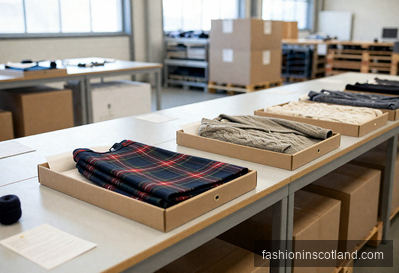
From Tartan to Techwear: Highlighting Innovation in Scottish Fashion

Introduction
From the battlefield plaids of Highland clans to the algorithm-designed outerwear of Glasgow startups, Scottish fashion has always punched far above the country’s size. The phrase “From Tartan to Techwear” captures more than a catchy alliteration; it describes a living spectrum of creativity that bridges folklore, fabric science, digital culture, and global street style. While most people associate Scotland with kilts and bagpipes, the contemporary reality is a highly networked ecosystem of heritage mills, avant-garde designers, sustainability pioneers, and tech-driven brands. This ecosystem is transforming the nation from a symbol of tradition into a laboratory for future-facing fashion. Understanding this journey reveals how a small country can leverage cultural identity into a powerful engine of innovation.
What makes Scotland so potent as a style incubator is not just its iconic patterns but the way they have been constantly reinterpreted. Tartan has moved from clan uniform to punk rebellion, from luxury runway to performance sportswear, often within a single generation. At the same time, Scotland’s universities and research centers have helped retool traditional mills for circular manufacturing, advanced dye technology, and smart textiles. The result is an unusually rich conversation between past and future. On one end, handloom weavers in the Highlands sustain centuries-old craft vocabularies; on the other, digital designers are building metaverse-ready garments inspired by those same crisscrossing lines. Taken together, they form a case study in how heritage can drive—not hinder—modernity.
Tartan, Kilts, and the Power of Reinvented Heritage
Tartan is often treated as a static symbol, but in reality it is one of the most continuously reinvented textiles in global fashion. Historically, patterns were linked to clans and regions, functioning as a visual language of belonging and allegiance. By the late 18th century, tartan had become politicized as the British state tried to suppress Highland culture, unintentionally turning the fabric into a symbol of resistance. Fast forward to the 20th century, and designers such as Vivienne Westwood and Alexander McQueen weaponized tartan again, this time as part of a punk and post-punk aesthetic that challenged English establishment norms. Each wave of appropriation reshaped tartan’s meaning while keeping its emotional power intact.
Today, contemporary Scottish designers approach tartan as both material and metaphor. Edinburgh-based label Le Kilt, founded by Samantha McCoach, takes the traditional kilt silhouette and recuts it through a modern, gender-fluid lens, proving that “heritage” need not mean “historic costume.” Christopher Kane has used distorted tartan prints and unexpected colorways in collections that oscillate between romantic and subversive, illustrating how small interventions in grid, hue, and scale can create radical new narratives. At the mass market level, brands collaborate with mills registered with the Scottish Register of Tartans to create proprietary patterns that blend corporate identity with cultural homage. One sportswear company, for instance, commissioned a moisture-wicking polyester tartan for football fans, pairing ancestral motifs with stadium-ready performance.
The kilt itself has undergone a similar reinvention arc, transitioning from formalwear to a platform for street and club culture. Designers produce utility kilts with cargo pockets, reflective trims, and ripstop fabrics, appealing to festivalgoers and outdoor enthusiasts who value movement and durability. In a 2022 survey by a Glasgow fashion collective, 41% of respondents under 35 said they would consider wearing a kilt in everyday life if it were styled in a more casual, contemporary way. That insight has sparked capsule collections that pair kilts with sneakers, tech shells, and graphic hoodies rather than Prince Charlie jackets and lace jabots. By reframing tartan and kilts as modular components in a wider styling toolbox, Scottish creators have preserved the emotional resonance of heritage while expanding its cultural relevance.
Craftsmanship, Mills, and Sustainable Material Innovation
Behind every kilt and tartan trench coat lies an infrastructure of mills and artisans whose skills are central to Scotland’s fashion story. Historic producers such as Johnston of Elgin, founded in 1797, and Harris Tweed Hebrides in the Outer Hebrides, anchor an industry that exports to over 60 countries. These mills are not just relics; they are R&D hubs experimenting with low-impact dyes, recycled fibers, and traceability technologies. A report from the UK Fashion and Textile Association noted that Scottish wool and tweed exports grew by nearly 30% over five years, fuelled in part by luxury brands seeking authentic yet responsibly produced materials. That demand has pushed mills to combine age-old weaving techniques with modern standards in energy efficiency and ethical sourcing.
Sustainability is where Scottish innovation becomes particularly visible. Harris Tweed, for example, is handwoven at home by islanders using 100% pure virgin wool, a production method that inherently limits scale but maximizes local employment and traceability. Several mills now publish lifecycle analyses that quantify water use, carbon emissions, and waste, enabling fashion partners to compare environmental footprints. One Highlands-based operation installed biomass boilers that cut its fossil fuel consumption by almost half, while another switched to closed-loop dye systems that recapture and reuse over 80% of process water. These incremental technical changes translate into marketing advantages for brands that can label products as low-impact and authentically sourced, creating a virtuous feedback loop between craft and climate responsibility.
At fiber level, Scottish universities collaborate closely with industry on new materials that shift the narrative further. Researchers at Heriot-Watt University’s School of Textiles and Design have developed wool-nylon blends optimized for abrasion resistance, unlocking applications in outerwear and technical suiting. Startups experiment with locally sourced seaweed-based finishes that add antimicrobial properties to fabrics without relying on harsh chemicals. Another project, supported by the Scottish Institute for Remanufacture, explored mechanical recycling of wool offcuts into spinnable yarn, turning factory waste into premium-feel textiles. The challenge, of course, is cost and scalability: eco-innovations can be more expensive initially, and mills must balance risk with the stability of existing orders. Yet the direction of travel is clear, positioning Scotland as a serious player in the race for cleaner fashion supply chains.
Scottish Streetwear, Techwear, and Performance-Driven Style
The global explosion of streetwear and techwear has created fertile ground for Scottish designers who understand weather, landscape, and subculture in equal measure. With cities like Glasgow and Dundee characterized by changeable rain, coastal winds, and a strong music scene, there is a built-in demand for clothing that performs on the street and in the club. Brands such as Sàinte and Story mfg.’s Scottish collaborators have leveraged this environment to develop capsules featuring taped seams, breathable membranes, and reflective trims, all filtered through a distinctly local visual language. A Glasgow-based label might reference estate signage, North Sea oil rigs, or post-industrial architecture in its graphics while using fabrics typically seen in mountaineering gear. The result is apparel that feels both credible in outdoor environments and relevant to youth culture.
Techwear, with its emphasis on modularity, pockets, and weatherproofing, aligns naturally with Scottish realities. Independent designers create articulated cargo trousers, sling bags, and shell jackets using recycled polyester, ePTFE membranes, or waxed cotton from UK mills. Some experiment with hybrid pieces like tartan-lined anoraks or kilts cut from waterproof nylon, blending heritage codes with cyberpunk silhouettes. In one case study, a small Edinburgh label collaborated with a Japanese fabric supplier to produce a run of ultralight, seam-bonded parkas that sold out online in 48 hours, driven largely by social media communities dedicated to functional fashion. The feedback highlighted not just aesthetics but details such as pit zips, vent placement, and hood ergonomics, demonstrating a highly informed consumer base.
Sports and outdoor brands further amplify this performance-focused innovation. Companies headquartered in Scotland design hiking shells and trail-running kits tested in the Cairngorms or on Skye’s ridgelines, using local terrain as real-time laboratories. A trailwear brand might run field tests with fell runners, collecting data on breathability, chafing points, and temperature regulation, then iterating pattern blocks accordingly. Scottish Rugby and various football clubs commission kits that integrate moisture management and biomechanically mapped stretch zones, often incorporating subtle tartan accents in collars or side panels. The advantage for designers is twofold: they gain rigorous testing conditions and a narrative that links function to place. The downside is that technical fabrics and complex construction can raise retail prices, forcing brands to articulate clearly why performance justifies the premium.
Digital Design, Gaming Culture, and Metaverse Tartan
A less obvious but rapidly growing dimension of Scottish fashion innovation lies in digital and gaming culture. Cities like Dundee have long been hubs for game development, and this ecosystem now intersects with fashion through avatar skins, virtual collections, and design software. Independent creators design tartan-inspired armor sets, cloaks, and streetwear for platforms such as Roblox, Fortnite Creative, and bespoke indie games, reaching audiences far beyond traditional fashion markets. A Dundee-based studio reported that a limited-edition digital tartan jacket for avatars in a popular game universe sold over 50,000 units at microtransaction prices, generating more revenue than some small physical collections. This blurring of lines between game asset and fashion item opens new revenue streams and pushes creators to think in polygons as well as pattern drafts.
Digital fashion education amplifies this momentum. Scottish design schools incorporate CLO 3D, Browzwear, and Blender into their curricula, enabling students to prototype garments virtually before cutting a single swatch. This reduces sampling waste and accelerates iteration cycles while encouraging more experimental silhouettes that would be too risky or expensive to trial physically. Several graduate collections feature “phygital” elements: physical kilts accompanied by AR filters, or jackets with QR-coded linings that unlock digital twins for use in metaverse spaces. One Glasgow student collaborated with a local NFT platform to mint a series of tartan-based generative artworks, each linked to a real-world scarf woven on demand. These hybrid practices challenge conventional notions of seasonality and ownership, as garments exist simultaneously as physical products, digital assets, and narrative touchpoints.
Of course, digital-first fashion also raises critical questions about access, sustainability, and aesthetics. On the positive side, virtual garments circumvent material waste and can democratize experimentation, giving young designers global exposure without the cost of runway shows. Digital collections can be updated, reskinned, or recontextualized inside game worlds, extending their lifespan. However, they rely on energy-intensive server infrastructure and can inadvertently perpetuate fast-fashion mindsets in virtual space, where “buying” another outfit feels consequence-free. Scottish innovators are beginning to address these tensions by exploring lower-energy blockchain solutions, time-limited drops that encourage more mindful digital consumption, and educational campaigns linking virtual purchases to real-world environmental commitments. The conversation mirrors broader fashion debates, but filtered through Scotland’s particular mix of tech literacy and cultural custodianship.
Global Influence, Collaboration, and the Scottish Fashion Ecosystem
Scottish fashion innovation does not occur in isolation; it thrives on a network of collaborations, export relationships, and cultural showcases. Events such as Edinburgh International Fashion Festival and Glasgow’s creative conferences bring together designers, mill owners, technologists, and policymakers. According to Creative Scotland, the fashion and textiles sector contributes over £750 million annually to the Scottish economy, with a significant portion tied to export-driven activity. International luxury houses visit Scottish mills for capsule collaborations, tapping into the credibility of “Made in Scotland” labels. When a Paris or Milan brand announces a limited run of Harris Tweed sneakers or a tartan-lined parka, it not only boosts mill revenue but also feeds back into the country’s image as a source of distinctive, high-quality materials.
Education and incubation play a critical role in sustaining this ecosystem. Programs at institutions such as Glasgow School of Art and Gray’s School of Art combine critical theory with practical training in pattern cutting, knitwear, and digital design. Many graduates enter local startups or launch their own micro-brands, often supported by initiatives like Fashion Foundry or Business Gateway’s creative industry support schemes. These incubators provide mentorship in areas such as pricing, supply chain management, and intellectual property, helping designers navigate the notoriously complex economics of fashion. One success story involves a small knitwear label from the Borders that used incubator guidance to shift from wholesale to a direct-to-consumer model, doubling its profit margin within two years while retaining production within a local family mill.
At the cultural diplomacy level, Scottish fashion becomes a soft power instrument. National tourism campaigns highlight knitwear, tweed, and tartan not simply as souvenirs but as touchpoints in a deeper narrative of innovation and resilience. Exhibitions at institutions like the V&A Dundee showcase Scottish designers alongside international peers, emphasizing dialogues rather than provincialism. There are also deliberate efforts to broaden which stories are told, with more attention to designers from diverse backgrounds who reinterpret Scottish identity through diasporic or hybrid lenses. A Glasgow-based designer of Nigerian-Scottish heritage, for example, created a collection that fused tartan with Ankara prints, prompting conversations about migration, belonging, and the multiplicity of “Scottishness.” Such projects underscore that innovation is as much about who gets to design as about what gets made.
Conclusion
The journey from tartan to techwear encapsulates a broader story about how cultures evolve without erasing themselves. Scotland shows that heritage can act as a springboard rather than a constraint, provided it is approached with curiosity and criticality. Mills modernize their looms and chemistry without abandoning the hand of the weaver; designers remix kilts and tweeds into garments suited to city commutes, club nights, and virtual worlds. Tech entrepreneurs treat game skins and AR filters as legitimate canvases for exploring national motifs. All of these strands braid together into a fashion landscape that is far more nuanced than tourist clichés suggest, balancing romance and realism, nostalgia and experimentation.
For designers, brands, and consumers outside Scotland, the country’s fashion ecosystem offers several practical lessons. First, invest in understanding your own material and cultural heritage, not as static branding but as a dynamic set of design problems to be reinterpreted for new contexts. Second, treat sustainability not as a marketing afterthought but as a driving constraint that can spark technical and aesthetic breakthroughs, as seen in Scottish mills’ work on recycled fibers, low-impact dyes, and traceable supply chains. Third, embrace cross-disciplinary collaboration: pair coders with pattern cutters, gamers with textile scientists, clan historians with streetwear stylists. Finally, acknowledge the tensions—between physical and digital, local and global, tradition and disruption—and use them as sources of creative friction rather than obstacles. Scotland’s spectrum of fashion innovation demonstrates that when a culture is willing to keep rewinding and rewriting its own visual code, its possibilities for self-expression and industry growth become effectively open-ended.
As consumers increasingly seek garments that tell meaningful stories, perform under real-world conditions, and align with ethical values, Scotland’s approach feels less like a niche and more like a prototype for the future. A tartan-check shell jacket designed in Glasgow, woven in the Highlands, tested on a Skye ridgeline, and sold with an accompanying digital twin in a game platform is no longer science fiction; it is an emerging template. The challenge for the next decade will be scaling these innovations without diluting their distinctiveness or compromising environmental goals. If Scotland can continue to anchor its experimentation in genuine craft, honest storytelling, and technological curiosity, it will not only maintain its place on the fashion map but help redraw that map entirely. In that sense, the journey from tartan to techwear is not a linear progression but a continually looping thread—one that binds past, present, and future into a single, ever-evolving fabric.

More from Fashion in Scotland
Published by the Fashion in Scotland editorial team · July 19, 2026
This article was produced with AI-assisted drafting and curated data, with editorial oversight for clarity. It is provided for general information only.